
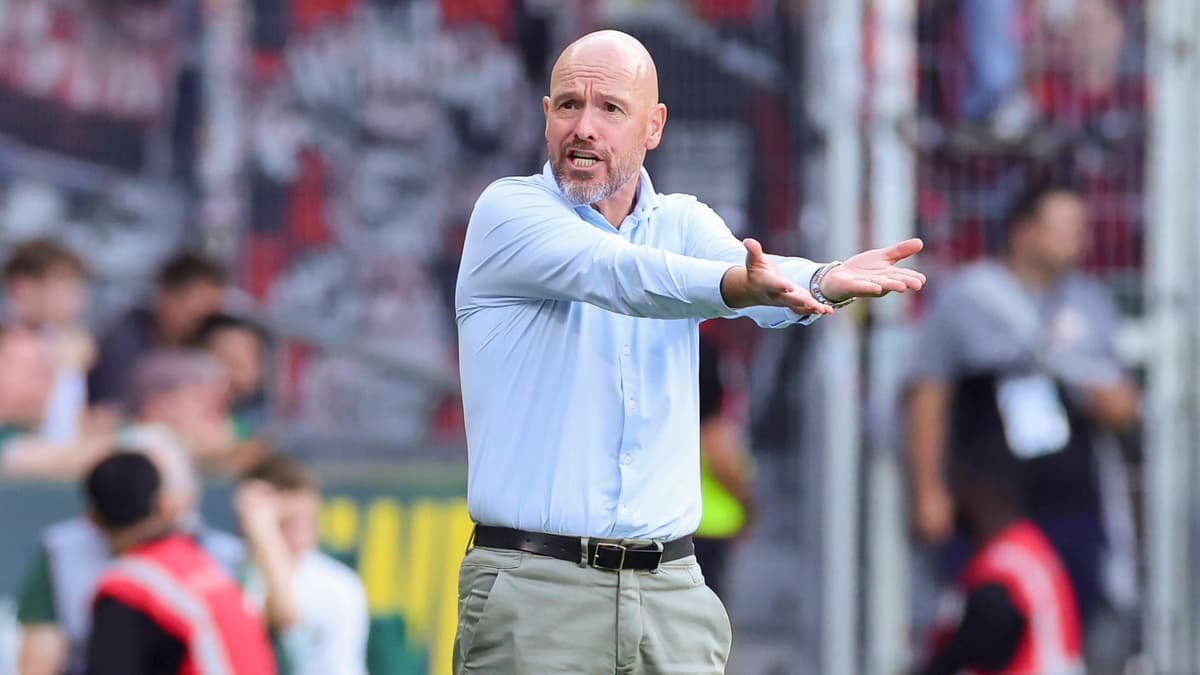
In the world of European football, few names have come to signify the kind of progressive, methodical approach that modern managers are known for. One such name that stands out is Erik ten Hag. Known for his work with Ajax and now Manchester United, ten Hag’s tactical mastery, ability to develop players, and focus on team harmony have elevated him to one of the most respected managers in European football. His journey to the top of European football has been marked by a blend of consistency, innovative thinking, and an unwavering commitment to his vision of football.
The Early Days of Erik ten Hag’s Career
Erik ten Hag’s journey into management began in the lower tiers of Dutch football. He was born in Haaksbergen, the Netherlands, in 1970, and his footballing career started as a player, mostly in the lower leagues. However, his real passion lay in coaching, and he soon shifted his focus to management.
After several years managing smaller clubs, including FC Utrecht, ten Hag’s big break came when he was appointed manager of Ajax in 2017. His work at FC Utrecht had caught the attention of many in the Dutch football community, with his ability to organize teams and develop young talent standing out. At Ajax, ten Hag was given the platform to show the world what he was capable of, and he did not disappoint.
Ten Hag’s Tactical Approach: High Press, Positional Play, and Fluidity
One of the most notable aspects of Erik ten Hag’s managerial philosophy is his tactical approach. He draws many influences from the principles of total football, a style of play that has been synonymous with Dutch football since the 1970s. However, ten Hag’s approach is very much a modern evolution of this style, incorporating the pressing game and positional play that have become so prevalent in top European football.
At Ajax, he employed a high pressing game, where the team would look to win the ball back as high up the pitch as possible, often suffocating opponents and denying them any time to build play. This intensity was complemented by an intricate positional play system, where players were required to move fluidly between roles and spaces, allowing the team to maintain control and dictate the tempo of the match.
One of the key elements of ten Hag’s tactics is the flexibility of his formations. Whether deploying a 4-2-3-1 or 4-3-3 formation, his teams are always adaptable, with players able to switch positions seamlessly. His system demands intelligence and awareness from all players, not just the attackers. Midfielders play a vital role in transitioning from defense to attack, and the full-backs are expected to provide width and support in the final third.
Developing Young Talent: Ajax’s Golden Generation
Perhaps one of the most significant aspects of Erik ten Hag’s success at Ajax was his ability to nurture and develop young talent. Under his guidance, Ajax produced one of the most exciting teams in European football, with the likes of Matthijs de Ligt, Frenkie de Jong, Hakim Ziyech, and Donny van de Beek all making a significant impact on the global football stage.
Ten Hag didn’t just rely on the academy’s output, but he made it a central part of his footballing philosophy. He believed in giving young players a chance to shine, even in high-pressure situations. This led to Ajax’s run to the UEFA Champions League semifinals in the 2018-2019 season, where they knocked out the likes of Real Madrid and Juventus, playing some of the most thrilling football the competition had seen in years.
His emphasis on young players and team cohesion meant that Ajax was able to compete with Europe’s elite clubs on a fraction of the budget. Players developed under ten Hag’s tutelage, not just in technical skill, but in tactical understanding and mentality. This culture of developing young talent has been one of his most enduring legacies, as it has set Ajax up for future success.
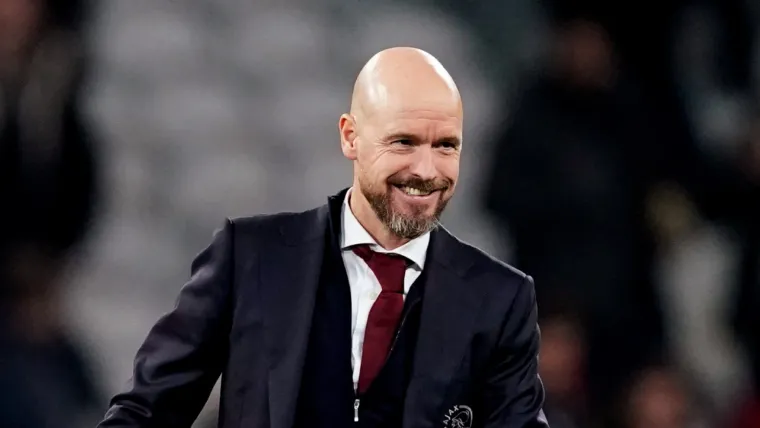
Transitioning to Manchester United
In 2022, Erik ten Hag made the high-profile move to one of the biggest clubs in the world: Manchester United. Taking over at a time of turmoil and instability, his appointment was seen by many as a long-term project to restore the club to its former glory.
One of the most significant challenges for ten Hag at Manchester United was to rebuild a team that had underperformed for several years. While the club had talented players, there was no clear identity or tactical cohesion. Ten Hag’s job was to implement his vision while navigating the pressure of managing one of the most high-profile clubs in world football.
His first season at Manchester United saw mixed results, but ten Hag’s ability to improve players and instill a sense of discipline and organization was evident. He continued to implement his high-pressing, possession-based style, but he had to adapt his tactics to the Premier League’s fast pace and physicality.
Importantly, ten Hag also made significant strides in improving the mental and psychological aspects of the team. Manchester United had been criticized for lacking resilience and consistency, but under ten Hag, they started to show greater mental fortitude, especially in high-stakes matches.
The Influence of Ten Hag on European Football
Erik ten Hag’s rise in European football is not just about the success of his individual teams. His influence extends far beyond the pitch. His tactical philosophy has been widely admired and adopted by other managers, particularly in the Netherlands and across Europe. The emphasis on pressing, possession, and positional play has become a hallmark of many modern teams.
Ten Hag’s coaching style emphasizes the importance of adaptability, and his ability to adjust tactics based on the opposition or situation is one of his defining characteristics. This flexibility allows him to not only compete with the best teams in Europe but also to outsmart them tactically.
Moreover, his success at Ajax and Manchester United has contributed to the increasing importance of developing a cohesive team unit, rather than relying on individual brilliance. The collective effort, organization, and intelligence are what ten Hag’s teams are known for, and this has set a new benchmark in European football.
Conclusion: A Legacy of Tactical Brilliance and Player Development
Erik ten Hag’s journey from a manager in the lower leagues to one of the most respected coaches in European football is a testament to his vision, discipline, and ability to adapt. His tactical brilliance, combined with a strong focus on developing young talent and fostering a cohesive team, has reshaped how football is played at the highest level.
As he continues his journey with Manchester United, the legacy of Erik ten Hag is already becoming clear. His success at Ajax was no fluke, and the improvements he’s bringing to Manchester United show that he is not just a manager for the short term but one who is building something special for the future.
For anyone looking to understand the future of European football, Erik ten Hag’s name is one that will surely be remembered for years to come. His commitment to tactical innovation, player development, and team cohesion has set a new standard for managers to follow. As he continues to build on his achievements, there’s no doubt that his influence will continue to shape the future of the game.
For more insights into football management and the evolution of the game, feel free to explore other articles on buzzjournal!
